July 2026 · AA Advanced Home Solutions
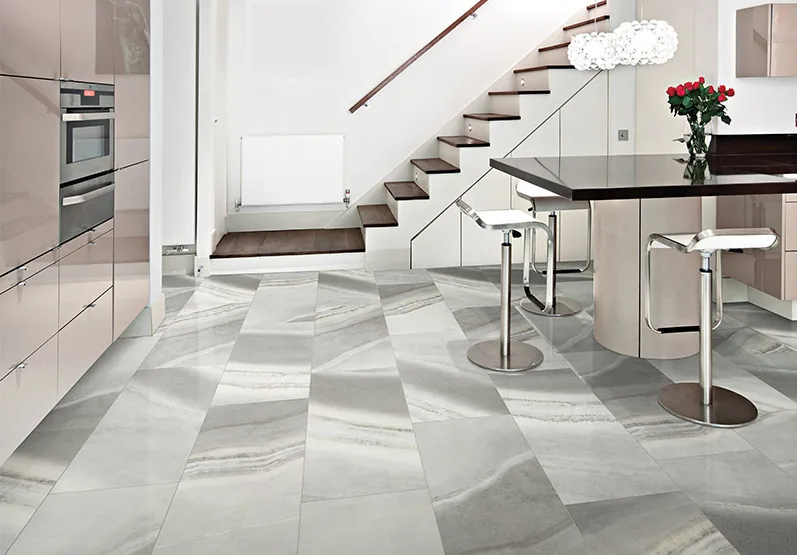
Flooring that looks great in a showroom doesn't always hold up once it's living through a South Florida summer. Humidity, occasional flooding risk, and constant air conditioning cycling all put real stress on flooring materials that homeowners further north rarely have to think about.
Tile remains one of the most reliable choices here, and for good reason: it's completely unaffected by humidity, handles water exposure near kitchens and bathrooms without issue, and stays cool underfoot. Large-format tile in particular has become popular for its clean, fewer-grout-line look, and wood-look porcelain tile gives you the appearance of hardwood without any of the moisture risk.
LVP has become a go-to for homeowners who want a warmer look than tile at a lower cost, and modern versions are genuinely water-resistant, not just water-tolerant. It's a strong option for bedrooms, living areas and even kitchens, though we still steer clients away from cheaper vinyl in rooms with direct water exposure like bathrooms.
Solid hardwood is the flooring we recommend most cautiously in this climate. Real wood expands and contracts with humidity swings, and in homes without perfectly consistent climate control, that movement can cause gapping, cupping or warping over time. Engineered wood handles humidity better than solid hardwood, but it's still more sensitive than tile or LVP.
Laminate sits in between — a budget-friendly option that's improved significantly in water resistance over the years, though it's still not immune to prolonged moisture exposure the way tile is. It's a reasonable choice for bedrooms and other lower-moisture areas of the home.
The right answer usually isn't one flooring type for the whole house — it's tile or LVP in kitchens and bathrooms, and whatever look you prefer (including wood-look tile if you want that warmth) in drier living spaces. We can walk through what's realistic for your specific rooms and budget.
Get a free written estimate from AA Advanced Home Solutions.