A dramatic improvement is never one decision. It is the result of better planning, proportion, light, material and execution.
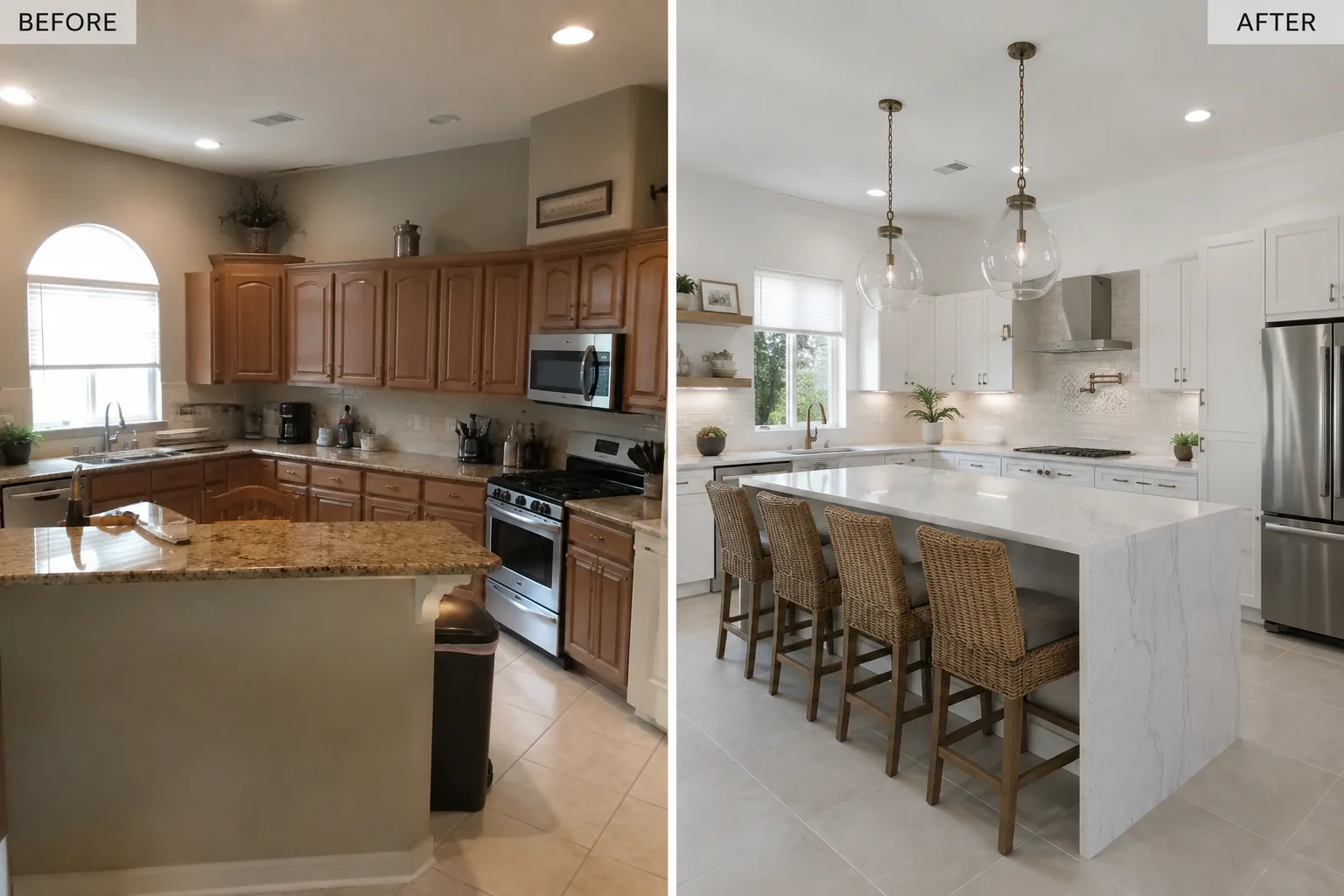
A brighter layout, larger island and cleaner architectural language create a more inviting gathering space.
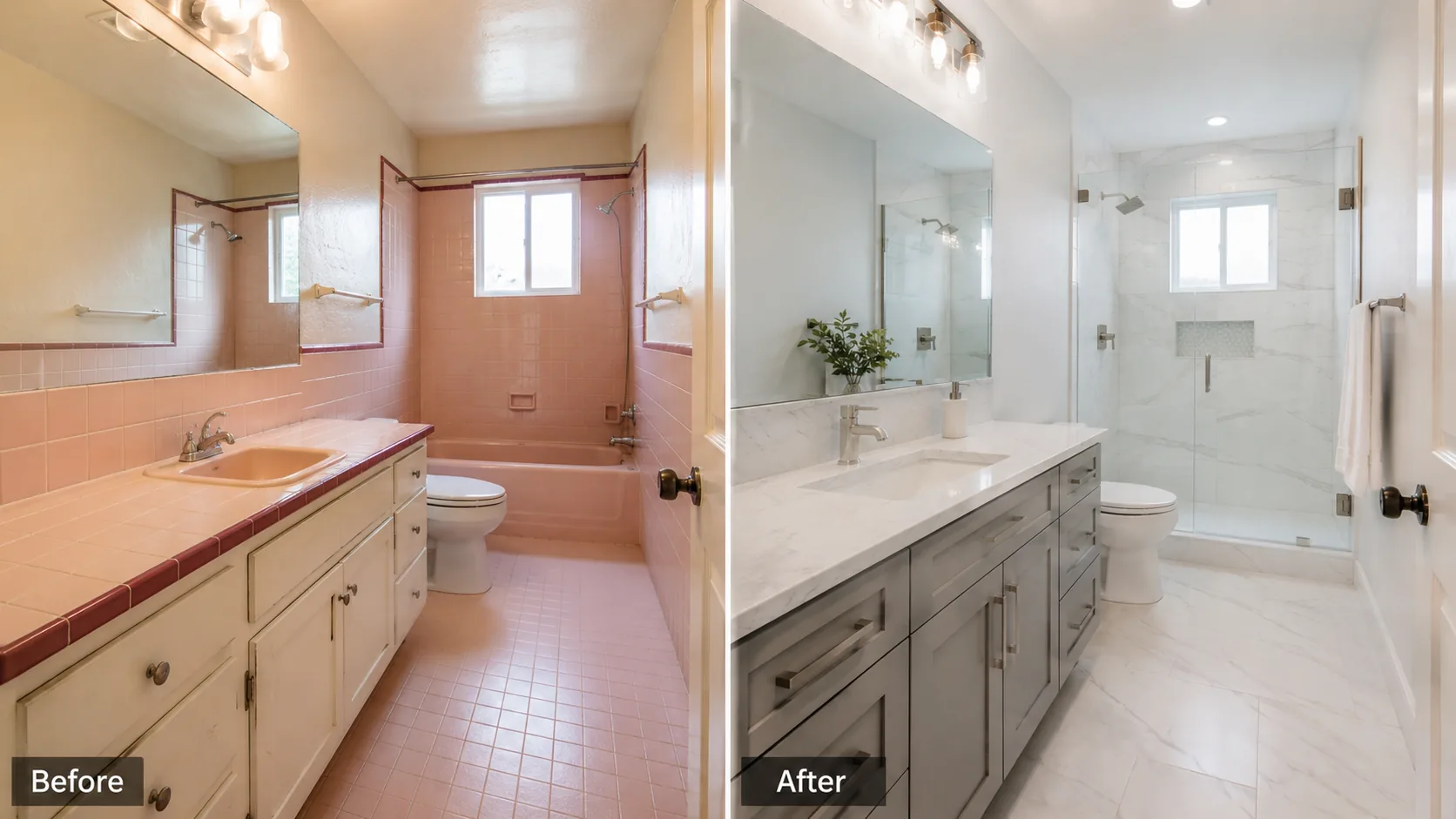
Outdated tile and fixtures replaced with a calm, modern palette and frameless shower.
A strong transformation is not only a change in color or style. It shows how layout, storage, lighting, materials, and construction details can improve the way a room works.
Look for wider pathways, better storage, clearer work zones, improved shower access, more useful counters, consistent flooring, and stronger connections between rooms. These changes often provide more lasting value than decorative updates alone.
Demolition may reveal uneven surfaces, outdated utilities, water damage, or previous repairs. The finished image cannot show every preparation step, but those steps influence whether cabinets align, tile drains correctly, flooring remains stable, and fixtures operate as intended.
Use the examples to identify goals, then review the related service pages for deeper guidance about planning, materials, timing, cost factors, and permit considerations.
Selections should be evaluated as a complete system rather than one sample at a time. Compare colors in the actual room, consider daylight and evening lighting, and confirm how edges, transitions, hardware, grout, trim, and adjacent finishes will meet. A material that looks impressive in isolation may not be the best choice when cleaning, water exposure, slip resistance, heat, pets, children, or replacement availability are considered.
Maintenance expectations should be discussed before purchasing. Natural stone may require sealing and product-specific care. Grout color and joint size affect both appearance and cleaning. Cabinet finishes vary in resistance to moisture and impact. Flooring products have different requirements for flatness, expansion, transitions, and approved cleaning methods. Understanding these details protects the investment after construction is complete.
When comparing estimates, look beyond the total. Confirm demolition, disposal, protection, permits, preparation, material allowances, labor, utility changes, trim, paint, cleanup, and final details. Ask whether products are specified clearly and how unforeseen conditions or requested changes will be handled. Two proposals that appear to describe the same remodeling project may include very different scopes.
A complete written scope helps homeowners make an informed decision and reduces misunderstandings during construction. It should identify the work included, important exclusions, responsibility for selections, payment schedule, and the process for approving changes.
Broward County includes homes and condominiums across Fort Lauderdale and surrounding South Florida communities. The best renovation respects the property's construction while improving the way the household lives. That may mean preserving a useful footprint and upgrading finishes, or it may require a more substantial layout change. The right answer comes from evaluating the actual space, goals, and budget together.
Before work starts, confirm which products have been selected, who is responsible for ordering them, and whether dimensions or specifications must be approved before purchase. Discuss access, protection of adjacent rooms, debris removal, work hours, pets, parking, utility interruptions, inspections, and the expected location of stored materials.
It is also helpful to identify decisions that can affect the schedule. Custom cabinetry, specialty tile, fabricated counters, glass, appliances, and certain fixtures may have longer lead times. Ordering too late can interrupt the sequence, while ordering before dimensions are confirmed can create costly mistakes. A preconstruction checklist gives the homeowner and contractor a shared reference point.
After completion, follow manufacturer guidance for cleaning, sealing, ventilation, filters, grout, hardware adjustment, and surface protection. Avoid harsh products that are not approved for the installed material. Address leaks, loose fixtures, damaged caulk, or unusual movement early rather than allowing a small maintenance issue to affect surrounding finishes.
Keep product names, colors, model numbers, care instructions, and leftover specialty materials when practical. This information can make future maintenance or small repairs easier and helps preserve a consistent appearance throughout the home.
Review the related service pages to compare materials, project stages, cost factors, local considerations, and frequently asked questions. Then gather photographs, measurements, and a list of priorities before requesting a consultation. The more clearly the goals are defined, the easier it is to build an accurate scope and productive remodeling plan.
AA Advanced Home Solutions serves Fort Lauderdale and communities throughout Broward County, with selected projects in surrounding South Florida areas. Contact the team to discuss the property location, the rooms involved, and the improvements you are considering.